Maslow’s Hierarchy of Needs
Have you ever wondered why it’s hard to focus on self-growth when life feels overwhelming? Or why certain goals feel out of reach even though you’re “doing all the right things”? Maslow’s Hierarchy of Needs can help make sense of this.
Maslow, a humanistic psychologist, proposed that humans have different types of needs—and we tend to meet them in a specific order. At the base of the pyramid are our survival needs: food, shelter, safety. Once those are met, we can turn our attention to connection, confidence, and eventually—self-actualization, or living a meaningful, authentic life.
In therapy, we often explore what’s beneath the surface—what unmet needs may be fueling your stress, sadness, anxiety, or sense of emptiness. Maslow’s Hierarchy of Needs is a simple but powerful framework that can help us understand why certain patterns keep showing up, and why some goals feel just out of reach.
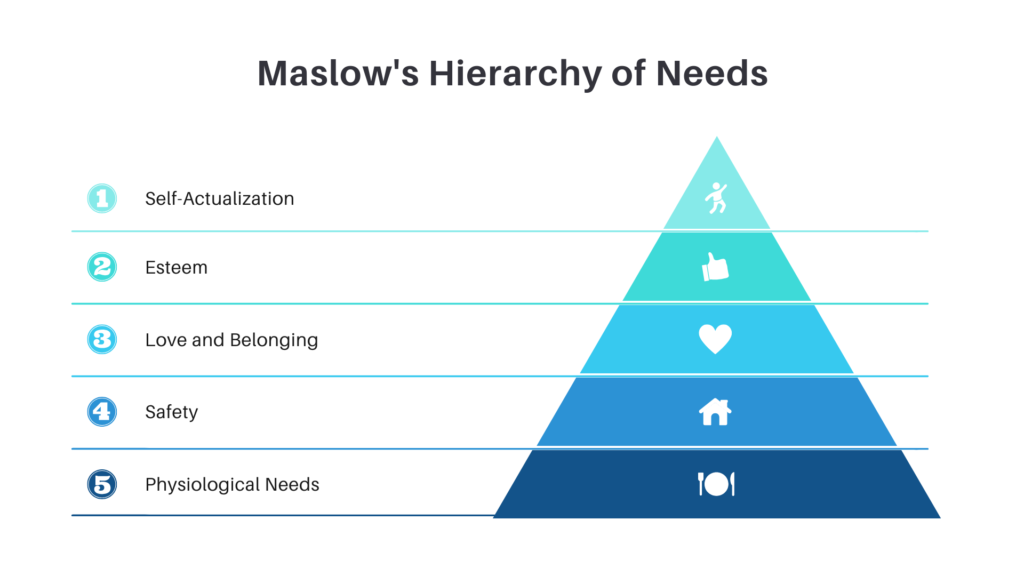
Let’s walk through the five tiers—and how they might show up in your life:
Tier 5 – Physiological Needs
“I’m exhausted but keep pushing through. I don’t even notice when I’m hungry.”
These are your basic survival needs: food, sleep, hydration, movement, rest.
When these aren’t met, it’s hard to function—yet many high-achievers overlook them.
You might:
- Skip meals or rely on caffeine instead of nourishing food
- Sleep poorly due to racing thoughts or stress
- Feel disconnected from your body’s cues for rest, hunger, or movement
Therapy reminder: You deserve rest and nourishment even if you’re “doing okay.” Meeting these needs is foundational, not indulgent.
Tier 4 – Safety Needs
“I can’t relax. I’m always waiting for the other shoe to drop.”
Safety isn’t just physical—it’s emotional and financial too.
You may look “fine” on the outside but feel chronically unsafe inside.
You might:
- Be navigating a toxic relationship, financial insecurity, or unstable housing
- Feel unsafe expressing emotions or setting boundaries
- Be constantly bracing for rejection, conflict, or loss
Therapy reminder: You don’t have to earn your sense of safety. It’s a need, not a luxury.
Tier 3 – Love and Belonging Needs
“I take care of everyone else, but feel unseen or alone.”
At this level, the need is for connection, love, and belonging.
Even people with full calendars and social lives can feel emotionally isolated.
You might:
- Struggle with feeling like a burden or outsider
- Long for deeper relationships but keep others at arm’s length
- Give to others constantly, hoping it will make you feel valued in return
Therapy reminder: You deserve relationships where you feel seen, heard, and safe to be your full self.
Tier 2 – Esteem Needs
“No matter what I achieve, it never feels like enough.”
This is about confidence, respect, and self-worth.
When your self-esteem depends on productivity, perfection, or others’ approval, it’s fragile.
You might:
- Constantly compare yourself to others
- Feel like an imposter even when you’re succeeding
- Struggle to take a compliment or acknowledge your efforts
Therapy reminder: You are worthy—outside of your achievements. Let’s gently challenge the inner critic together.
Tier 1 – Self-Actualization Needs
“I want more meaning. I just don’t know where to start.”
At the top of the pyramid is the desire to live fully, authentically, and with purpose.
Many therapy clients come in feeling “off” or unfulfilled, even if their life looks great on paper.
You might:
- Feel disconnected from what really matters to you
- Struggle with big life questions like: Who am I? What do I want?
- Want to create a life that aligns with your values—but feel unsure how
Therapy reminder: Wanting more isn’t selfish—it’s human. You’re allowed to evolve, grow, and create a life that feels like yours.
Applying Maslow’s Theory in Therapy
1. It’s okay to focus on basic needs first.
If you’re feeling overwhelmed, unsafe, or burned out, it can be hard—sometimes impossible—to work on self-worth, relationships, or long-term goals. Therapy can help you slow down and gently return to what you truly need right now, without guilt.
2. Healing isn’t linear.
You might move between different levels of need throughout your life—and that’s normal. Sometimes you’re growing and thriving, and other times you’re simply trying to get through the day. Therapy supports you wherever you are on that path.
3. It helps you meet yourself with compassion.
Understanding your struggles as unmet needs—not flaws—can shift the way you treat yourself. Therapy creates space to notice what’s been missing, validate how hard it’s been, and begin meeting those needs in a sustainable, caring way.
4. It guides therapy goals that actually make sense.
Instead of jumping straight to “fixing” things, Maslow’s framework helps us build therapy goals that are grounded in your real-life context—what you’re carrying, what you’ve survived, and what you’re still trying to rebuild.

Ready to Book?
If something inside you is saying it’s time, you can book a session through my secure Jane system. Choose an appointment that feels right—I’ll be here when you’re ready.